Wooden fence boards: sizes, timber and finish
A fence board is the simplest part of a fence and also the one people get wrong most often. Three dimensions decide it, plus one property that no amount of paint can make up for.
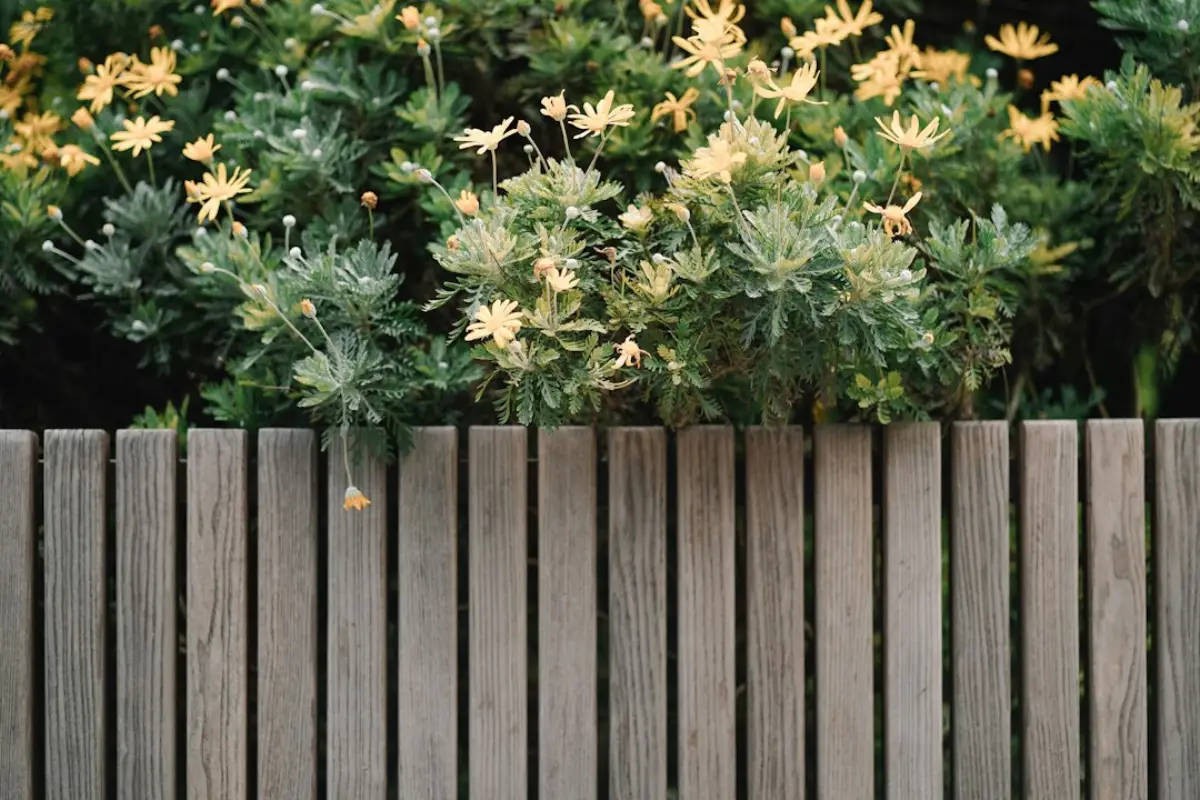
Height
Boards around 120, 150 and 180 cm are asked for most often, sometimes 160 or 200 cm. These are not standards, just lengths that cut well from common timber. The height of the fence, though, does not follow from what is on offer but from what the fence has to hide. A low fence around 100 cm marks a boundary, one around 150 cm keeps people out, and only a fence above 180 cm reliably blocks the view from the street into your windows.
Watch one thing: the height of the board is not the height of the fence. The gap at ground level or a ground board is added to it, and whatever is hidden behind the horizontal rail is taken off.
Spacing
The gap between boards is the one parameter that adjusts privacy continuously. Boards butted together give a solid fence; a gap the width of a board gives the classic picket look. The narrower the gap, the more boards per metre, which raises both material and labour.
An alternative that appears in enquiries more and more often is double-sided boarding: the boards alternate on either side of the rail. The fence is solid when seen straight on but lets light and air through at an angle, so the wind does not push against it the way it does on a solid wall.
Profile
A square board is the most common and the cheapest. A half-round one looks softer and sheds water from the top edge better, and on fences finished flat on top that edge is where the timber goes first. A chamfered or rounded top edge is therefore a practical measure, not just decoration.
Timber species
Pressure-treated spruce and pine are the cheapest option. Larch has greater natural durability and weathers to a silver patina if left unpainted, which suits some people and not others. Acacia is hard and tough but harder to source in long straight pieces, so it is used more often for posts than for boards.
What no finish can make up for
The footing. A board standing on the ground or touching grass will draw moisture from below whatever it is painted with. That is why the bottom edge is kept above the ground and the infill is fixed to metal or concrete posts. The second thing is the end grain on top: an unprotected end takes up water along the fibres far faster than the sides. A chamfer or a cap does more here than another coat of stain.
The finish
A stain lets the grain show and is renewed more often. An opaque paint lasts longer but covers the texture and is harder to touch up in patches. More important than the choice between them is the cycle: the finish is renewed before it starts to crack. Once it cracks, water gets underneath and painting over is no longer enough, it has to be sanded.
There is more about installation and posts in the article Fence installation step by step, and a full overview of materials on the page about the turnkey wooden fence.