Turnkey fencing of a whole plot
Fencing a whole plot is not the same as building one fence. The sides of a plot have different jobs to do and usually different materials.
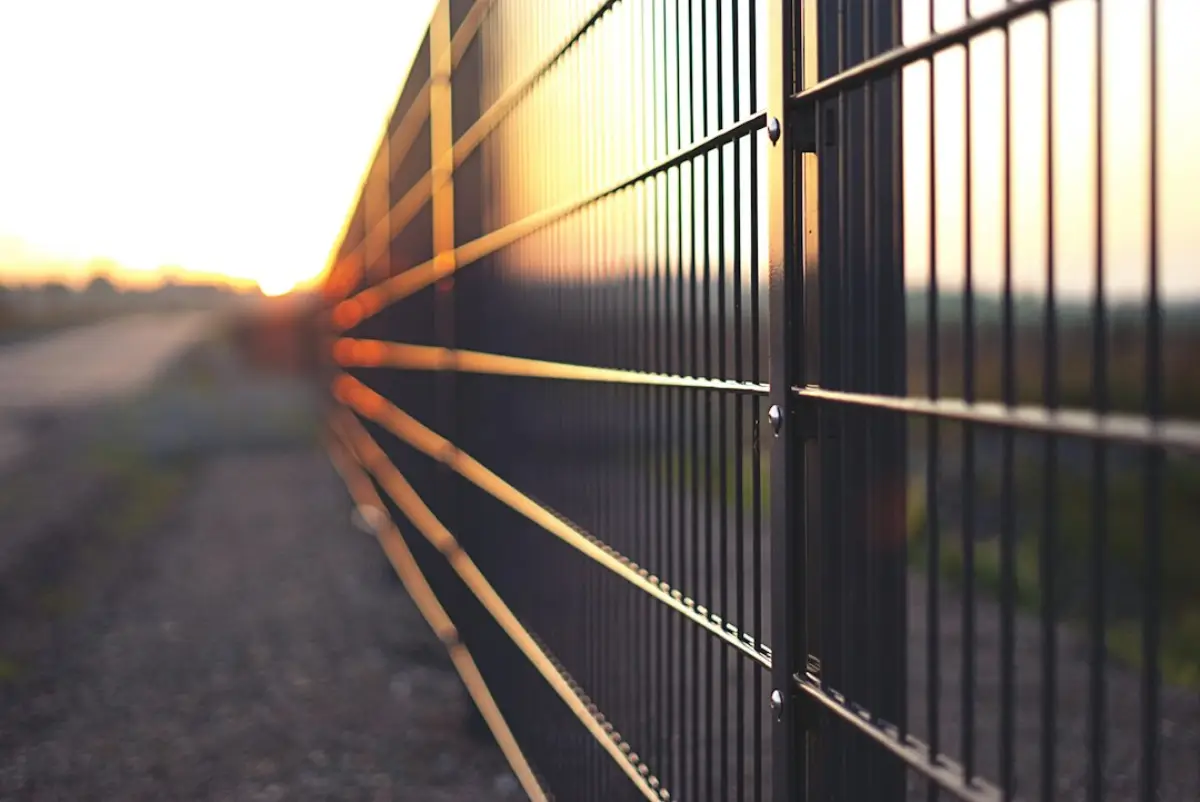
Turnkey fencing of a plot means one supplier covers the whole boundary: setting out, removing the old fence, posts, infill, wicket gates, the driveway gate and the finishing at ground level. The advantage is not only a single invoice but mainly that one team deals with the corners and the joins between the sides.
Every side has a different job
The street side is seen, so looks and usually privacy matter there. The side boundary with a neighbour tends to be a compromise, because the fence serves both parties. The back side, often facing a field or a garden, is usually the most economical, because marking the boundary is enough. That is why materials are routinely combined around a whole plot: a solid wooden fence or metal units at the front, mesh at the back.
The boundary comes first
Until it is clear where the boundary runs there is no point counting metres. Neither an old fence nor long-standing habit need match the land register. If the boundary is unreadable on the ground or disputed, a surveyor sets it out before any material is ordered. For the enquiry it is enough to tell us you are not sure.
Corners, braces and joins
Every corner of a plot means a post with different statics and bracing. Over long straight runs this disappears; on a plot with many bends it is a significant part of the work. So the total length alone is not enough in an enquiry, the turning points are counted as well.
What gets taken away
The old fence, concrete footings, roots and the soil dug out of the post holes. This is the item people do not expect in a budget, and over a longer boundary it is not negligible. Tell us in the enquiry whether anything has to be demolished and what stands on the boundary today.
What to tell us
- Approximate lengths of the individual sides
- The height of the fence, different per side if needed
- Whether the boundary is certain or disputed
- The slope of the plot and where it is steepest
- The number of gates and the width of the entrance
- What stands on the boundary today and whether it is being removed
- Access for machinery and somewhere to unload material
The more of this you send, the less the quote has to be recalculated. The survey fills in the rest.
The individual materials are covered on the pages about the wooden fence, metal fence and mesh and gates.
Frequently asked questions
Can I have more than one type of fence on a plot?
It is normally done that way and on larger plots it is usually more sensible. A representative material on the street side, something cheaper and see-through on the back boundary. What matters is handling the joins at the corners so the transition does not look like a patch.
What do you need to know before a quote is made?
Approximate lengths of the individual sides, the height, the number of gates, the slope of the plot, whether an old fence is being demolished and whether the boundary is certain. The survey on site fills in the rest. The more you write, the less the quote has to be recalculated.
Do you also arrange a surveyor to set out the boundary?
Setting out is done by a surveyor, not by a fencing company. If the boundary is disputed, that is a step that belongs before installation. Tell us in the enquiry that you are unsure about the boundary and we will agree the order of the steps.
Tell us the length of your fence
An approximate length, the height you want and whether the plot slopes is enough to start. We will fill in the rest.
We pass the enquiry to a fencing company that works in your area. If we have no partner there, we will tell you straight away instead of leaving you waiting.
Phone: 775 654 443
E-mail: [email protected]